
In the realm of international finance and trade, the Office of Foreign Assets Control (OFAC) plays a crucial role in regulating transactions and economic activities involving sanctioned countries and parties. Understanding OFAC Licensing is essential for compliant business operations, particularly in contexts where financial and trade sanctions are applicable. This article will explore the nuances of OFAC Licensing (General & Specific Licenses) OFAC Licensing (General & Specific Licenses), shedding light on the differences between general and specific licenses, their application processes, and the implications for businesses operating in sanctioned markets.
What is OFAC?
The Office of Foreign Assets Control (OFAC) is an office of the U.S. Department of the Treasury that administers and enforces economic and trade sanctions against target countries and regimes, terrorists, international narcotics traffickers, those engaged in activities related to the proliferation of weapons of mass destruction, and other threats to U.S. national security, foreign policy, or economy. OFAC’s regulations can be complex and require thorough understanding and compliance from businesses engaging in international transactions.
The Importance of OFAC Licensing
OFAC licensing is a critical aspect of compliance for U.S. entities and individuals engaging in transactions that may involve OFAC-sanctioned countries or individuals. Non-compliance with OFAC regulations can lead to severe penalties, including hefty fines and potential criminal charges. Therefore, obtaining the proper licenses is fundamental for lawful operations.
Types of OFAC Licenses
OFAC primarily issues two types of licenses: General Licenses and Specific Licenses. Understanding these types is essential for entities looking to navigate the complexities of OFAC regulations.
General Licenses
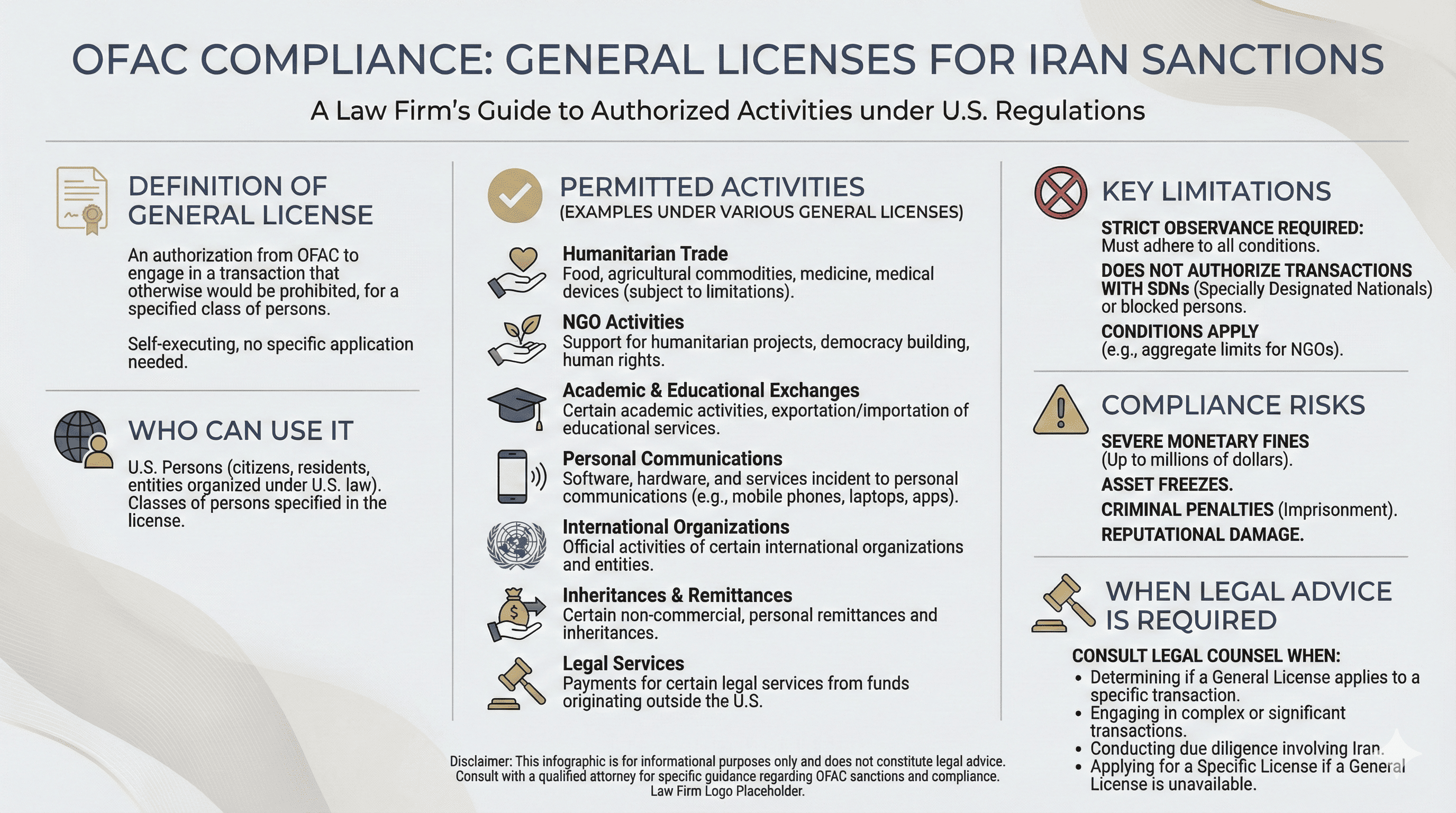
A General License authorizes a broad class of activities that would otherwise be prohibited under OFAC regulations. These licenses are pre-printed on the OFAC website, allowing individuals or entities to engage in certain activities without applying for individual approval. General Licenses facilitate legal transactions while ensuring compliance with U.S. sanctions.
For example, OFAC may issue a General License allowing humanitarian aid to be sent to a sanctioned country. Businesses can conduct activities outlined in the General License without obtaining additional approval, as long as they adhere to the conditions specified in the license.
Specific Licenses
In contrast to General Licenses, Specific Licenses are tailored to specific individuals or entities, allowing them to perform certain activities that are otherwise restri
cted. Entities must apply for a Specific License through OFAC, providing detailed information about the proposed transaction, the parties involved, and the purpose of the transaction.
Specific Licenses are typically granted for unique circumstances that warrant an exception to the general prohibitions imposed by OFAC. For instance, a U.S. company wishing to enter a long-term business contract with a sanctioned entity might need to obtain a Specific License that lays out the terms of the engagement.
Applying for OFAC Specific Licenses
The process of applying for a Specific License is critical and requires detailed attention to compliance. The following steps outline a general approach to the application process:
- Understand the Regulations: Before applying, it’s vital to familiarize yourself with the relevant OFAC regulations that apply to your situation.
- Prepare Documentation: Collect all necessary documentation that supports your application. This may include contracts, communication records, and justification for why the license should be granted.
- Submit Application: Complete the application form provided by OFAC and submit it along with supporting documents. This form typically requires information about the transaction, parties involved, and the compliance measures that will be taken.
- Await Response: After applying, patiently wait for a response from OFAC. The review process can vary in length, depending on factors such as the complexity of the request and OFAC’s current workload.
Compliance and Record Keeping
Once a General or Specific License has been obtained, compliance does not end there. Entities must continuously monitor their activities to ensure that they remain within the bounds of the license and OFAC regulations. This includes:
- Maintaining detailed records of all transactions conducted under the license.
- Regularly reviewing compliance policies to adapt to changes in OFAC regulations.
- Training employees on OFAC compliance and ensuring awareness of potential risks associated with transactions involving sanctioned entities.
Consequences of Non-Compliance
Engaging in transactions without the appropriate OFAC licenses or failing to comply with license conditions can result in severe repercussions. Penalties for violations can include:
- Significant monetary fines, which can amount to millions of dollars depending on the nature and severity of the violation.
- Criminal charges against individuals involved in non-compliant transactions, leading to potential imprisonment.
- Increased scrutiny and monitoring of the business’s future transactions, impacting the overall operation and reputation of the entity.
Conclusion
Navigating OFAC regulations and understanding the intricacies of licensing is essential for any U.S. business involved in international transactions. General and Specific Licenses serve as tools that can facilitate compliant operations within sanctioned environments. Whether engaging in humanitarian efforts or entering business contracts, organizations must prioritize compliance to mitigate risks and maintain lawful practices. By staying informed about current regulations and ensuring that all transactions are conducted under the appropriate licenses, businesses can effectively operate while upholding U.S. law.